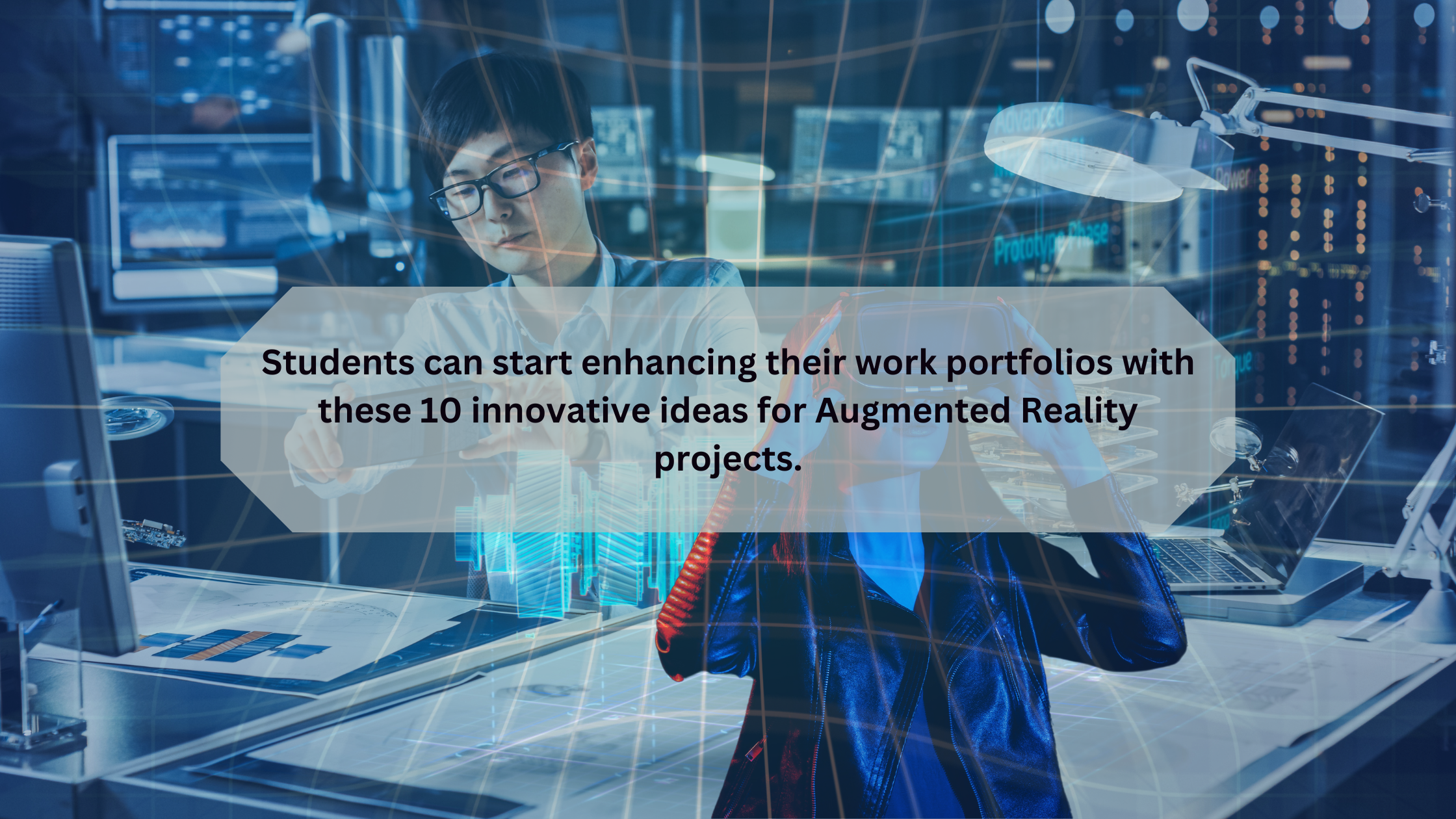
Introduction Augmented Reality Projects Ideas for Students. Augmented Reality (AR) has opened up new frontiers in technology and creativity, providing students with unique opportunities to explore and innovate. Here are ten inspiring AR project ideas for students, each designed to enhance learning and spark curiosity. 1. Educational Flashcards for Augmented Reality Projects Ideas For Students Create AR-enhanced educational flashcards that bring subjects to life. For example, a biology flashcard could display a 3D model of a cell, allowing students to explore its components interactively. This project can help in subjects like anatomy, astronomy, or history, making learning more engaging and effective. 2. Virtual Historical Tours For Augmented Reality Projects Ideas For Students Design an AR app that provides virtual tours of historical sites. Students can scan a location or image, and the app will overlay historical information, 3D models, and videos, providing an immersive learning experience about the past. This project is perfect for history classes and can be extended to include cultural and architectural insights. 3. Science Experiments For Augmented Reality Projects Ideas For Students Develop an AR application that simulates science experiments. Students can conduct virtual experiments by manipulating digital elements in real-time, which helps in understanding complex scientific concepts without the need for physical lab equipment. This is particularly useful for chemistry and physics experiments. 4. Interactive Storybooks For Augmented Reality Projects Ideas For Students Create an AR storybook that transforms reading into an interactive adventure. As children read the story, they can point their device at the pages to see animations, hear character voices, and interact with elements of the story. This project encourages reading and imagination among younger students. 5. Language Learning App Augmented Reality Projects Ideas For Students Design an AR app to assist in language learning. By pointing the device at objects or text, the app can display translations, pronunciations, and usage examples. This interactive method can help students learn new languages faster and more effectively. 6. Art Gallery For Augmented Reality Projects Ideas For Students Set up a virtual art gallery using AR technology. Students can create digital versions of their artwork, which can be viewed in 3D through an AR app. This project not only showcases students’ creativity but also teaches them about digital art and curation. 7. Geography Lessons For Augmented Reality Projects Ideas For Students Develop an AR geography app that overlays geographic information onto maps or physical locations. Students can learn about different regions, climates, and cultures through interactive 3D models and data visualizations. This project can make geography lessons more engaging and informative. 8. Augmented Reality For Projects Ideas For Students in Coding Create an AR platform that helps students learn coding by visualizing code execution. Students can write code and see the results in real-time through AR, which can help them understand abstract programming concepts more concretely. This project bridges the gap between coding and real-world applications. 9. Environmental Awareness For Augmented Reality Projects Ideas For Students Design an AR app focused on environmental education. By scanning natural elements like trees, plants, or animals, the app provides information about species, ecosystems, and conservation efforts. This project aims to raise awareness about environmental issues and encourage sustainable practices. 10. AR Sports Training For Projects Ideas For Students Develop an AR application for sports training, where students can practice and improve their skills. The app can provide real-time feedback on their movements, suggest improvements, and simulate game scenarios. This project is ideal for physical education and can be tailored to various sports. Conclusion Augmented Reality Projects Ideas for Students. Augmented Reality offers endless possibilities for students to explore, learn, and create. These ten AR project ideas not only inspire creativity but also enhance educational experiences across various subjects. By integrating AR into their projects, students can develop valuable skills and gain a deeper understanding of the world around them. READ MORE INFORMATIVE ARTICLES GO TO OUR HOME PAGE FAQ
10 In-Demand Augmented Reality Jobs Revolutionizing the Tech Industry
Introduction Augmented Reality Jobs. Augmented Reality (AR) is transforming the tech landscape, offering a myriad of new opportunities and revolutionizing various industries. From gaming and entertainment to healthcare and education, AR is creating an immersive experience that is reshaping the way we interact with the world. This surge in AR technology has led to an increased demand for skilled professionals who can develop, manage, and innovate within this field. The Rise of Augmented Reality Jobs In Demand Of AR overlays digital information onto the real world, enhancing the user’s perception and interaction with their surroundings. The technology has gained significant traction, with major companies like Apple, Google, and Microsoft investing heavily in AR development. This growth is driven by the technology’s potential to enhance user experiences, improve operational efficiency, and create new business opportunities. Key Industries Embracing Augmented Reality Jobs In Demand Of 1.Gaming and Entertainment: Augmented Reality Jobs has revolutionized gaming by creating immersive and interactive experiences. Games like Pokémon Go have shown the potential of AR to blend digital content with the real world, attracting millions of users globally. 2.Healthcare: Augmented Reality Jobs is being used for medical training, surgical simulations, and patient care. Surgeons can visualize complex medical procedures, enhancing precision and reducing risks. 3.Education: Augmented Reality Jobs applications are transforming education by making learning more interactive and engaging. Students can explore 3D models of historical sites, scientific concepts, and more. 4.Retail and E-commerce: Augmented Reality Jobs allows customers to try products virtually before purchasing, enhancing the shopping experience and reducing returns. 5.Manufacturing and Maintenance: Augmented Reality Jobs is used for training, assembly, and maintenance processes, providing real-time instructions and reducing errors. In-Demand Augmented Reality Jobs 1.AR Developers: Skilled in programming languages like C#, C++, and JavaScript, AR developers create applications and software that integrate digital content with the real world. 2.UX/UI Designers: These professionals design user-friendly interfaces and experiences that enhance AR interactions. 3.3D Artists and Modelers: They create realistic 3D models and animations used in AR applications. 4.AR Content Creators: Content creators develop engaging and interactive AR experiences, often collaborating with marketers and advertisers. 5.AR Project Managers: They oversee AR projects, ensuring they are delivered on time and within budget, while meeting quality standards. 6.AR Hardware Engineers: These engineers develop the hardware components, such as AR glasses and headsets, needed to support AR applications. 7.Data Scientists and Analysts: They analyze data generated by AR applications to improve performance and user experience. Skills Needed for AR Jobs Programming Knowledge: Proficiency in languages like C#, C++, JavaScript, and Python is crucial. Experience with AR Platforms: Familiarity with AR development tools like Unity, Unreal Engine, ARKit, and ARCore. 3D Modeling and Animation: Skills in 3D design software like Blender, Maya, or 3ds Max. UX/UI Design: Understanding of user experience principles and interface design. Problem-Solving Abilities: Strong analytical skills to troubleshoot and optimize AR applications. Collaboration: Ability to work effectively in multidisciplinary teams, including developers, designers, and marketers. The Future of AR Jobs The future of AR jobs is promising, with continued growth expected across various sectors. As technology advances, new roles and specializations will emerge, creating even more opportunities for professionals in the field. The integration of AR with other technologies like Artificial Intelligence (AI) and the Internet of Things (IoT) will further expand its applications and demand for skilled workers. Conclusion Augmented Reality is revolutionizing the tech industry, creating new opportunities and transforming various sectors. The demand for AR jobs is on the rise, driven by the technology’s potential to enhance experiences, improve efficiency, and generate new business opportunities. As AR continues to evolve, professionals with the right skills and expertise will be in high demand, shaping the future of this exciting field. READ MORE INFORMATIVE ARTICLES GO TO OUR HOME PAGE FAQs
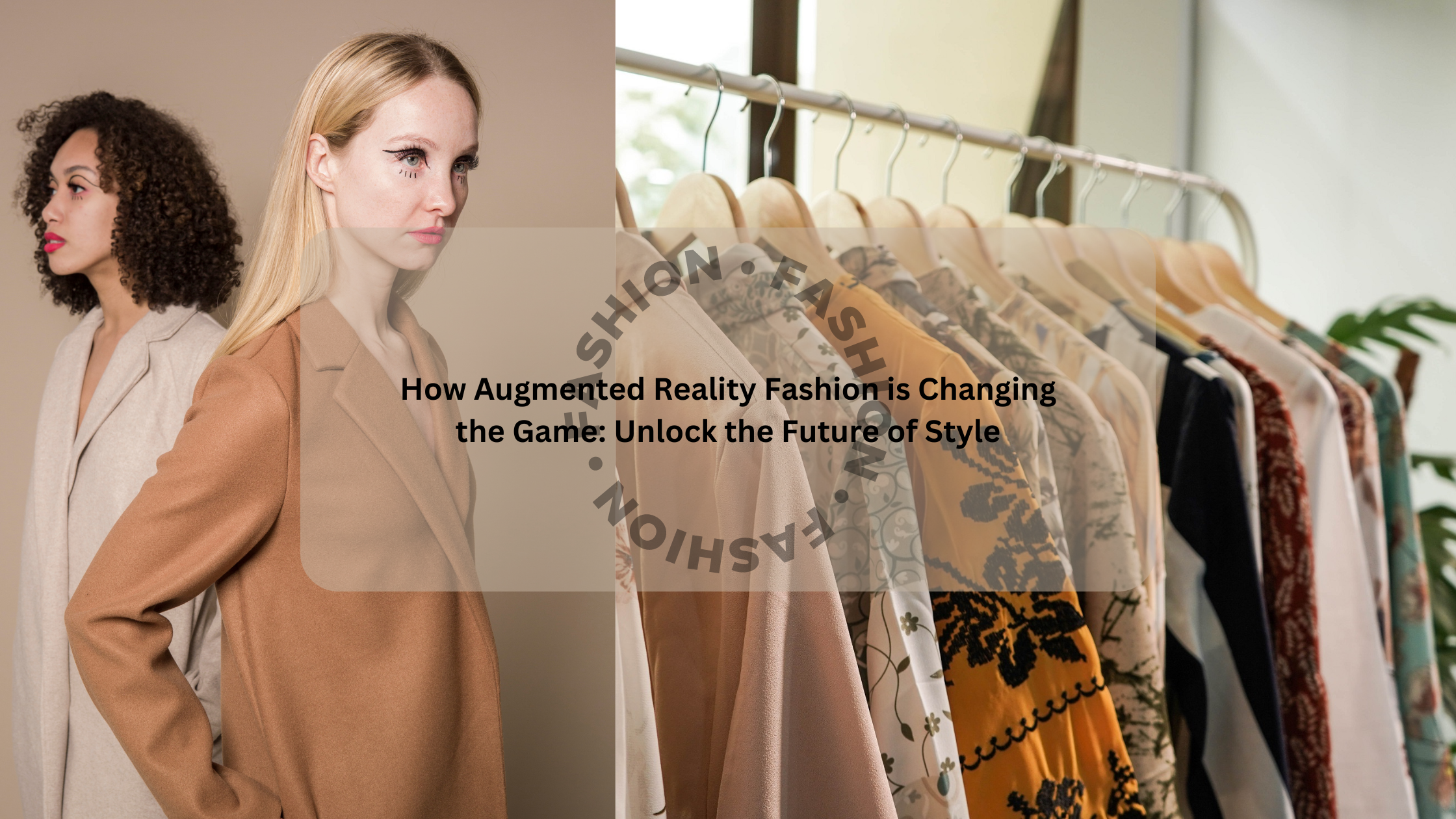
How Augmented Reality Fashion is Changing the Trends: Unlock the Future of Style in 2024
Introduction Augmented Reality Fashion is Changing the Trends. Augmented Reality (AR) has transformed various industries, and fashion is no exception. With the integration of AR, the fashion industry is experiencing a revolution in how consumers interact with brands, try on clothes, and make purchasing decisions. This article explores how AR is changing the fashion game, highlighting its benefits, challenges, and future potential. 1. Virtual Try-Ons How Augmented Reality Fashion is Changing Game One of the most significant impacts of Augmented Reality in fashion is the introduction of virtual try-ons. This technology allows consumers to see how clothes, accessories, and even makeup will look on them without physically trying them on. Using a smartphone or AR glasses, shoppers can overlay digital images of products onto their bodies in real time. Brands like Zara, Sephora, and Warby Parker have already implemented AR try-on features, enhancing the shopping experience and reducing the need for physical fitting rooms. 2. Enhanced Shopping Experience How Augmented Reality Fashion is Changing the Game AR Augmented Reality Fashion enhances the shopping experience by providing immersive and interactive elements. In-store AR mirrors can display different outfits on a customer, while online platforms can offer virtual showrooms and interactive catalogs. These features help customers make informed decisions, leading to higher satisfaction and lower return rates. Retailers can also create engaging marketing campaigns, such as virtual fashion shows and AR-based advertisements, to attract and retain customers. 3. Personalized Fashion And How AR Fashion Is Changing the Game AR Augmented Reality Fashion enables personalized fashion experiences by collecting data on individual preferences and body measurements. This data allows brands to recommend tailored products that fit perfectly and match the customer’s style. Personalized AR experiences can increase customer loyalty and drive sales, as consumers are more likely to purchase items that feel uniquely suited to them. Additionally, AR can assist designers in creating custom pieces by visualizing and modifying designs in real time. 4. Sustainability And How AR Fashion Is Changing the Game Sustainability is a growing concern in the fashion industry, and AR can contributehttps://en.wikipedia.org/wiki/Main_Page to more eco-friendly practices. By reducing the need for physical samples and prototypes, AR minimizes waste and conserves resources. Virtual try-ons also decrease the volume of returns, which often end up in landfills. Furthermore, AR can promote sustainable fashion choices by allowing consumers to visualize the environmental impact of their purchases and explore eco-friendly alternatives. 5. Accessibility and Inclusivity And How AR Fashion Is Changing The Game AR has the potential to make fashion more accessible and inclusive. Virtual try-ons can cater to people with disabilities or those who have difficulty accessing physical stores. AR can also help brands offer a wider range of sizes and styles, as digital garments can be easily adjusted to fit different body types. This inclusivity can expand a brand’s customer base and foster a more diverse fashion community. 6. Challenges and Limitations And How AR Fashion Is Changing The Game Despite its many benefits, Augmented Reality in fashion faces several challenges. High development costs and the need for advanced technology infrastructure can be barriers for smaller brands. Ensuring accurate and realistic virtual try-ons requires sophisticated algorithms and high-quality imagery. Privacy concerns also arise, as AR applications often collect and store personal data. Brands must address these issues to fully harness the potential of AR in fashion. 7. Future Prospects And How AR Fashion Is Changing The Game The future of Augmented Reality in fashion looks promising, with continuous advancements in technology and increasing consumer adoption. As AR becomes more mainstream, it will likely integrate seamlessly with other technologies, such as artificial intelligence and block-chain, to offer even more innovative solutions. The fashion industry can expect further improvements in virtual try-on accuracy, personalized shopping experiences, and sustainable practices. Conclusion Augmented Reality is undoubtedly changing the fashion game, offering a plethora of benefits to both consumers and brands. From virtual try-ons and personalized fashion to sustainability and inclusivity, AR is revolutionizing the way we shop, design, and experience fashion. While challenges remain, the future of Augmented Reality in fashion is bright, promising a more immersive, efficient, and inclusive industry. Also Read: Augmented Reality in Agriculture: Benefits & Challenges in 2024 FAQs