
Introduction what is one way a Virtual Reality Work Meeting ?Virtual Reality (VR) technology is revolutionizing the way we work, particularly in the realm of meetings and collaboration. The immersive nature of VR provides a unique opportunity to enhance team interaction and productivity. One of the most amazing ways VR is enhancing collaboration is by creating virtual workspaces that simulate real-world meeting environments, allowing team members to feel as if they are physically present together, regardless of their actual location. Enhancing Collaboration through Immersive Virtual Workspaces (what is one way a Virtual Reality Work Meeting) What is one way a Virtual Reality Work Meeting: Realistic Interaction VR meetings replicate the experience of in-person interactions. Participants can see each other’s avatars, make eye contact, and read body language, which are crucial aspects of effective communication often lost in traditional video conferencing. What is one way a Virtual Reality Work Meeting: Spatial Audio Unlike traditional video calls, VR uses spatial audio, making it easier to identify who is speaking. This feature helps in managing conversations more naturally and avoids the confusion of overlapping dialogues. What is one way a Virtual Reality Work Meeting: Interactive Environments VR workspaces can be customized to suit the meeting’s purpose. Whether it’s a brainstorming session, a project review, or a client presentation, the environment can be adapted to include necessary tools like whiteboards, sticky notes, and 3D models, making collaboration more dynamic and engaging. What is one way a Virtual Reality Work Meeting: Breaking Down Barriers Virtual workspaces eliminate geographical barriers, enabling global teams to meet and collaborate seamlessly. This inclusivity fosters diversity of thought and encourages innovation as teams bring varied perspectives to the table. What is one way a Virtual Reality Work Meeting: Enhanced Focus The immersive nature of VR helps reduce distractions, allowing participants to remain more focused and engaged during meetings. The physical separation from everyday distractions aids in maintaining attention on the task at hand. What is one way a Virtual Reality Work Meeting: Record and Review VR meetings can be recorded, enabling teams to review sessions for missed details or future reference. This feature is particularly useful for training and on boarding, ensuring that new employees can experience past meetings. What is one way a Virtual Reality Work Meeting: Team Building Virtual reality can also be used for team-building exercises, creating scenarios that require collaboration and problem-solving. These activities can strengthen team cohesion and improve working relationships. Conclusion: Virtual reality work meetings are more than just a novelty; they are a transformative tool that can significantly enhance collaboration and productivity. By providing realistic, interactive, and distraction-free environments, VR helps teams communicate more effectively and work together more seamlessly, regardless of physical distance. READ MORE: TOP 5 BENEFITS OF USING VIRTUAL REALITY IN EDUCATION #virtual reality work meeting #virtual reality work meeting benefits #virtual reality business meetings #virtual meeting activities for work #how effective are virtual meetings FAQs

Augmented Reality in Agriculture: Benefits & Challenges in 2024
Introduction Augmented Reality (AR) in Agriculture is a transformative technology that overlays digital information onto the real world, enhancing the user’s perception and interaction with their environment. In agriculture, Augmented Reality has the potential to revolutionize various aspects, from crop management to livestock care, by providing farmers with real-time data and insights. This article explores the applications, benefits, and challenges of AR in agriculture, and concludes with a set of frequently asked questions (FAQs) to help you understand its potential impact. Applications of Augmented Reality in Agriculture Crop Management Augmented Reality in Agriculture can significantly improve crop management by providing detailed information about plant health, soil conditions, and pest infestations. Farmers can use Augmented Reality in Agriculture-enabled devices to scan their fields and receive instant feedback on nutrient deficiencies, water levels, and potential disease outbreaks. This allows for precise and timely interventions, improving crop yield and reducing the use of fertilizers and pesticides. Livestock Care Augmented Reality in Agriculture In livestock farming, Augmented Reality in Agriculture can assist in monitoring animal health and welfare. Wearable AR devices can track vital signs, movement patterns, and feeding behaviors, alerting farmers to any anomalies that might indicate health issues. This proactive approach helps in maintaining the well-being of the livestock and preventing the spread of diseases. Training and Education Augmented Reality in Agriculture provides an interactive and immersive way to train and educate farmers. Through Augmented Reality applications, farmers can visualize complex agricultural processes, such as machinery operation or irrigation systems, in a 3D format. This hands-on learning experience enhances understanding and retention, leading to more effective training outcomes. Precision In Augmented Reality In Agriculture Augmented Reality in Agriculture Precision agriculture relies on the accurate and efficient use of resources. Augmented Reality can enhance this by providing real-time data on weather conditions, soil properties, and crop status. This data helps farmers make informed decisions about planting, irrigation, and harvesting, optimizing resource use and increasing productivity. Equipment Maintenance AR can simplify the maintenance and repair of agricultural machinery. AR-guided maintenance systems can overlay instructions and diagrams onto the equipment, guiding farmers through the repair process step-by-step. This reduces downtime and ensures that machinery is kept in optimal working condition. Augmented Reality in Agriculture Benefits of AR in Agriculture Increased Efficiency By providing real-time data and insights, Augmented Reality in Agriculture can significantly increase the efficiency of agricultural operations. Farmers can make quicker and more informed decisions, leading to better resource management and higher productivity. Cost Savings AR can help reduce costs associated with farming by optimizing the use of inputs such as water, fertilizers, and pesticides. Early detection of plant and animal health issues can also prevent costly treatments and losses. Enhanced Sustainability With its ability to optimize resource use and reduce waste, AR contributes to more sustainable farming practices. This is crucial in the face of increasing environmental concerns and the need for sustainable food production. Improved Safety AR can enhance safety in agriculture by providing farmers with real-time hazard alerts and safety instructions. This is particularly useful when operating heavy machinery or handling hazardous substances. Better Decision-Making The detailed and timely information provided by AR enables better decision-making in all aspects of farming. This leads to improved crop yields, healthier livestock, and overall more successful agricultural operations. Challenges of AR in Agriculture High Initial Costs The implementation of AR technology can be expensive, particularly for small-scale farmers. The cost of AR devices and software, as well as the need for reliable internet connectivity, can be prohibitive. Technical Expertise Using AR technology requires a certain level of technical expertise. Farmers may need training to effectively utilize AR applications, which can be a barrier to adoption. Data Privacy and Security The use of Augmented Reality in Agriculture involves the collection and transmission of large amounts of data. Ensuring the privacy and security of this data is a significant challenge, particularly in regions with less robust data protection regulations. Connectivity Issues AR applications often require stable and high-speed internet connections to function effectively. In rural areas, where many farms are located, internet connectivity can be unreliable or insufficient, limiting the effectiveness of AR technology. Integration with Existing Systems Integrating AR technology with existing agricultural systems and practices can be challenging. It requires compatibility between various technologies and platforms, which can complicate the implementation process. Conclusion Augmented Reality in Agriculture holds immense potential to transform agriculture by providing farmers with real-time data and insights that enhance efficiency, sustainability, and productivity. While there are challenges to its adoption, such as high costs and technical expertise requirements, the benefits it offers make it a promising tool for the future of farming. As technology continues to advance and become more accessible, AR is likely to play an increasingly important role in the agricultural sector. By understanding the potential and challenges of Augmented Reality in Agriculture, farmers can better leverage this technology to enhance their operations and contribute to a more sustainable and efficient agricultural sector. READ MORE INFORMATIVE ARTICLES GO TO OUR HOME PAGE FAQs
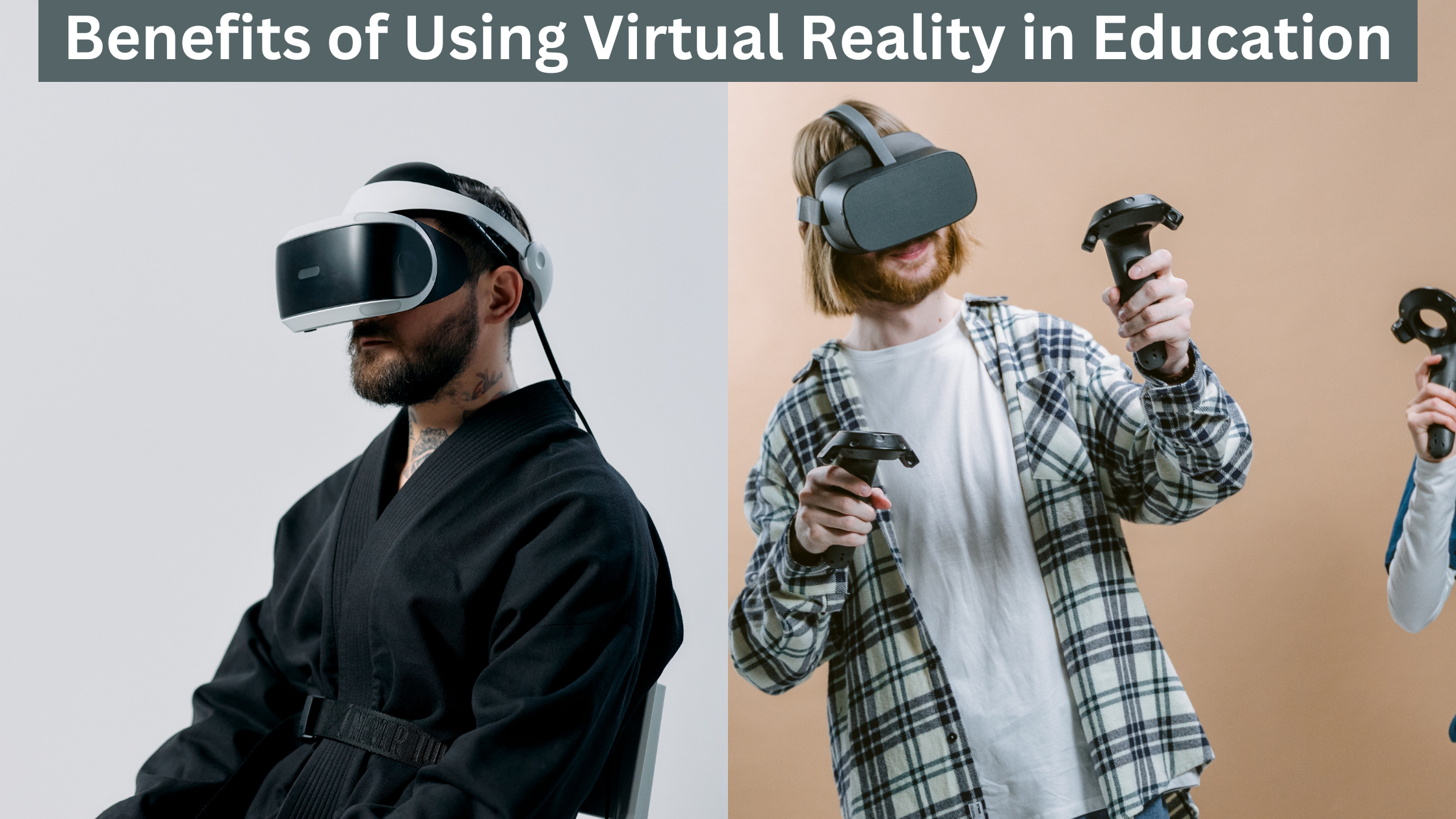
top 5 Benefits of Using Virtual Reality in Education
Introduction Using Virtual Reality in Education, VR is revolutionizing various fields, and education is no exception. By immersing students in a simulated environment, VR offers an engaging and interactive learning experience that traditional methods often fail to provide. Here are some of the key benefits of using Virtual Reality in education: 1. Enhanced Engagement and Motivation for Virtual Reality in Education VR transforms passive learning into an active experience, capturing students’ attention and increasing their motivation to learn. Immersive environments make learning fun and exciting, which can lead to better retention and understanding of the material. 2. Improved Understanding of Complex Concepts for Virtual Reality In Education Subjects like science and mathematics often involve abstract concepts that can be challenging to grasp through textbooks alone. VR allows students to visualize and interact with these concepts, making them more tangible and easier to understand. For instance, students can explore the human body in 3D or witness the effects of chemical reactions in a controlled virtual lab. 3. Real-World Simulation and Practical Skills For Virtual Reality In Education VR provides a safe environment for students to practice real-world skills. Medical students can perform virtual surgeries, engineering students can work on simulated machinery, and pilots can train in a virtual cockpit. This hands-on experience is invaluable and prepares students for real-life scenarios without the risk of costly mistakes. 4. Accessible Learning Opportunities For Virtual Reality In Education VR can bridge the gap for students who are unable to attend classes in person due to geographical or physical constraints. Virtual classrooms allow students from different parts of the world to learn together, fostering inclusivity and collaboration. Additionally, VR can accommodate different learning styles, offering personalized experiences that cater to individual needs. 5. Cultural and Historical Immersion for Virtual Reality In Education Through VR, students can take virtual field trips to historical sites, museums, and cultural landmarks, offering a richer understanding of history and different cultures. This immersive experience can bring history to life and foster a deeper appreciation of different societies and their heritage. 6. Enhanced Collaboration and Social Interaction for Virtual reality In Education VR facilitates collaborative learning by allowing students to work together in a shared virtual space. This promotes teamwork and communication skills, as students can interact, discuss, and solve problems collectively. VR platforms can also simulate real-world social scenarios, helping students develop essential interpersonal skills. 7. Cost-Effective Solutions for Virtual reality In Education While the initial investment in VR technology can be high, it can save money in the long run. Virtual labs and simulations reduce the need for physical materials and equipment, lowering costs for schools and universities. Additionally, VR can offer access to high-quality education resources that might otherwise be unavailable. 8. Safe and Controlled Environment For Virtual Reality In Education In fields like chemistry or engineering, practical experiments can sometimes be hazardous. VR provides a controlled environment where students can conduct experiments safely, without the risk of accidents. This not only ensures safety but also encourages students to experiment and learn from their mistakes. 9. Enhanced Teacher Capabilities For Virtual Reality In Education VR can be a powerful tool for teachers, enabling them to create more dynamic and interactive lesson plans. Teachers can use VR to demonstrate complex concepts, conduct virtual field trips, and provide immersive experiences that enhance traditional teaching methods. This can lead to more effective teaching and improved student outcomes. 10. Future-Ready Education For Virtual Reality As technology continues to evolve, VR is becoming increasingly relevant in various industries. By incorporating VR into education, schools and universities are preparing students for the future job market. Students who are familiar with VR technology will have a competitive edge in fields such as gaming, architecture, engineering, and healthcare. Conclusion The integration of Virtual Reality in education is a transformative step towards more engaging, inclusive, and effective learning. By offering immersive experiences, practical skills training, and personalized learning opportunities, VR can significantly enhance the educational process. As technology advances, the potential for VR in education will only continue to grow, making it an essential tool for future learning environments. For More Informative Article Visit Home Page FAQs